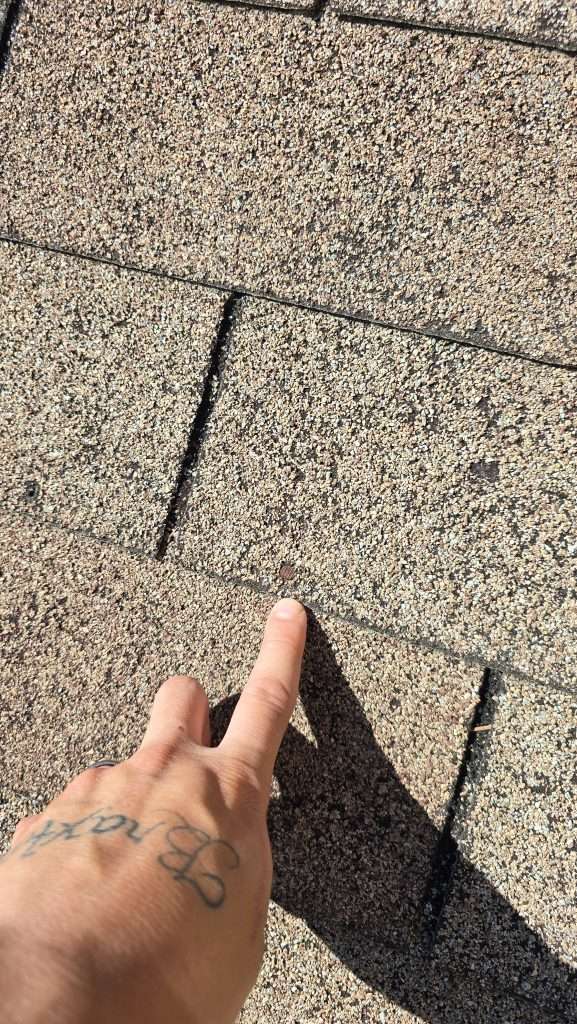
If hail came through Warner Robins, Byron, Bonaire, Kathleen, Perry, Centerville, or Fort Valley in the last year, your homeowner’s insurance may owe you a new roof. The catch: most homeowners either don’t realize they have a claim, file it wrong, or get talked into accepting less than they’re owed. Here’s exactly how a hail damage roof replacement claim works in Georgia, what insurance will and won’t pay, and the seven steps from inspection to a check in your hand.
The 7-step hail damage insurance claim process
Step 1: Document the storm event
Insurance claims work best when you can point to a specific storm date. NOAA keeps historic hail data by ZIP code — we can pull the records for your address to identify exactly when hail came through. If you took photos of dented vehicles or yard damage during or after the storm, save those — they’re useful documentation.
Step 2: Get a professional roof inspection (before filing)
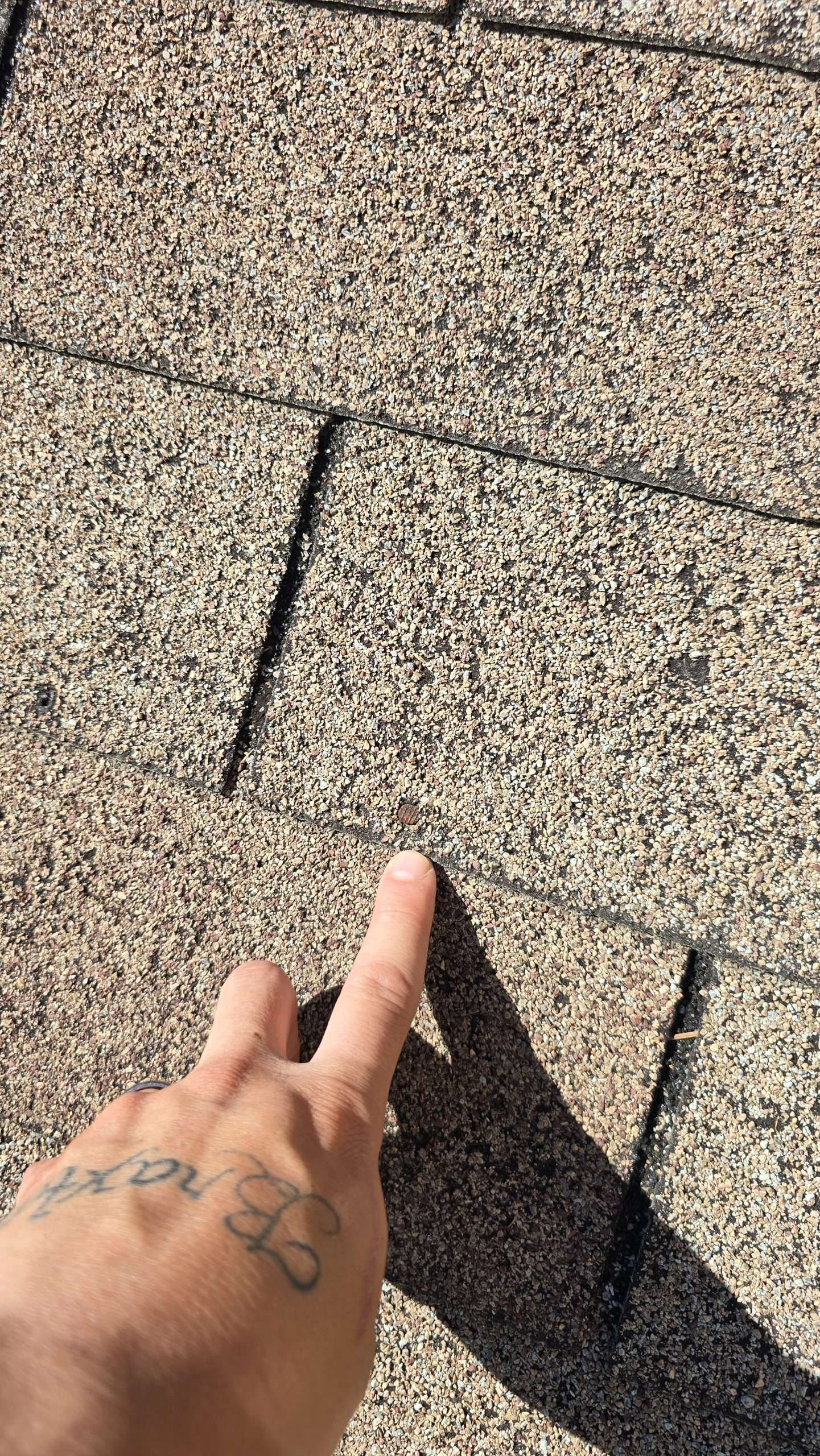
Don’t file the claim cold. File it with documentation. A free 22-point inspection with a written photo report shows exactly what damage exists and gives the adjuster a starting point. Inspectors who walk the roof find 3-5x more damage than ground-only inspections, and the difference often determines whether the claim approves a full replacement or just patch repairs.
Step 3: File the claim with your insurance carrier
Call your carrier’s claims department (number on your insurance card) or use their app. You’ll need: the storm date, your address, a description of damage (use the inspection report), and your policy number. The carrier assigns an adjuster who will schedule a visit, usually within 5-10 business days.
Step 4: Meet on-site with the adjuster
This is the most important step. We strongly recommend having your roofer on-site during the adjuster’s inspection. Adjusters can be excellent or rushed; having a knowledgeable second set of eyes ensures every piece of damage is documented. We don’t argue with adjusters — we just walk the roof together and make sure nothing is missed. Ridgeback meets your adjuster on-site at no charge.
Step 5: Receive the carrier’s scope and estimate
Within 7-14 days after the inspection, the carrier sends you a written scope of work and estimate. Read it carefully. The estimate should include: tear-off, shingles, underlayment, drip edge, ridge cap, ventilation, and disposal. If line items are missing or quantities seem low, your roofer can submit a supplement request to the carrier with documentation.
Step 6: Sign the contract and start work
Once you accept the scope, sign a contract with your chosen roofer (you, not the insurance, choose the roofer). The carrier typically issues an initial payment for ACV (depreciated value); after the work is complete and verified, they release the depreciation portion. We collect from you only what insurance has paid; you pay the deductible only.
Step 7: Submit final invoice and get full payment
After completion, your roofer submits the final invoice and certificate of completion to your carrier. The carrier releases the depreciation hold (the difference between ACV and RCV). The total you pay out-of-pocket is just your deductible — typically $1,000 to $5,000 — even if the actual replacement cost was $15,000+.
What insurance pays for (and what they don’t)
Insurance pays for: sudden, accidental storm damage from hail, wind, falling trees, lightning, and similar events. They pay to put your roof back to pre-loss condition with materials of like kind and quality.
Insurance does NOT pay for: normal wear and tear, age-related deterioration, neglected maintenance, pre-existing damage from storms you didn’t claim, or damage that’s been worsening for over a year without being addressed. They also don’t pay to upgrade your roof — if you want premium designer shingles instead of the architectural ones your old roof had, that’s typically out-of-pocket.
The “matching” question: what if my new shingles don’t match the rest of the roof?
This is a common situation when only part of the roof is damaged. Shingle colors fade over time, so even installing the exact same product produces a noticeable color difference. Georgia has matching laws that some carriers honor — if a section can’t be matched, they may approve full replacement instead of partial. Ask specifically about your matching coverage. We document this thoroughly when we encounter it.
Storm-chaser warning
After every major storm in Middle Georgia, contractors flood the area knocking on doors and offering free inspections that always conveniently find damage qualifying for full replacement. Some are legitimate; many aren’t. Two specific scams to watch for:
- Insurance fraud: A contractor inflates the claim or claims damage that isn’t really there. If insurance investigates and denies the claim, you’re stuck without a roof and possibly facing fraud questions yourself.
- Disappearing-warranty contractors: They install the roof, collect payment, and disappear. Their “lifetime warranty” is worthless. When something fails in year 3, no one is there.
Always vet contractors with a Georgia state license number, a verifiable local Middle Georgia address, and at least 3 years of consistent operating history. Never sign a contract on first contact.
Hail Damage Roof Replacement FAQ
How long do I have to file a hail damage claim in Georgia?
Most Georgia homeowner policies require claims to be filed within 12 months of the storm date, with some carriers requiring 60-90 day notice of damage. The earlier you file, the easier it is to demonstrate the damage came from a specific storm event.
Will hail damage qualify for a full roof replacement?
Most carriers use the threshold of 8 or more damaged shingles per 100 square feet (one square). Above that threshold, full replacement is typically approved. Below it, repairs are typical.
Can I choose my own roofer for a hail damage claim?
Yes. Insurance carriers cannot legally require you to use their preferred contractor. You have the right to choose any licensed Georgia roofer you trust.
What’s the difference between ACV and RCV insurance coverage?
ACV (Actual Cash Value) pays the depreciated value of your roof at the time of damage. RCV (Replacement Cost Value) pays for full replacement minus your deductible. RCV is significantly better for the homeowner. Check your policy to see which you have.
Do I need a public adjuster?
Most claims don’t require one. A reputable roofer can document damage thoroughly and meet on-site with your adjuster. Public adjusters typically take 10-15% of the claim payout. Use them only if your initial claim was denied or significantly underpaid.
Suspect hail damage? Start with a free written inspection.
Ridgeback meets your adjuster on-site at no charge and has documented hundreds of successful hail damage claims across Middle Georgia. Phones answered any time at 478-216-2678.